
When is the right time to plan cabling?
The ideal time to plan network cabling is before renovation — while walls are open and cables can be routed without demolishing finished walls. Any cabling done after renovation is a compromise: cables run visibly, in surface conduit along walls, or through relatively expensive after-the-fact in-wall installation.
If you're moving into a new business premises, use the first few weeks before furniture and equipment are moved in to plan and complete the cabling. Later intervention is expensive and disruptive.
Planning cabling must answer these questions: how many workstations need to be covered, where do the server and network equipment go, is a rack cabinet needed, are WiFi access points needed and where.
Cat5e, Cat6, or Cat6a — which cable to choose?
| Category | Maximum speed | Recommended use |
|---|---|---|
| Cat5e | 1 Gbps / 100m | Minimum standard, for renovations with limited budget |
| Cat6 | 1 Gbps / 100m, 10 Gbps / 55m | Recommended standard for new installations |
| Cat6a | 10 Gbps / 100m | For server rooms and installations planning 10 Gbps |
Our recommendation: Cat6 cable for all new office installations. The price difference compared to Cat5e is minimal (10–20% more expensive installation), and you get significantly better performance and a longer useful life without the need for reinstallation.
What does professional network cabling include?
- Planning and design — drawing the cabling schematic, planning port positions, router, switch, and access point locations.
- Cable installation — routing cables through walls, floors, or ceilings, or in conduit with aesthetic finishing.
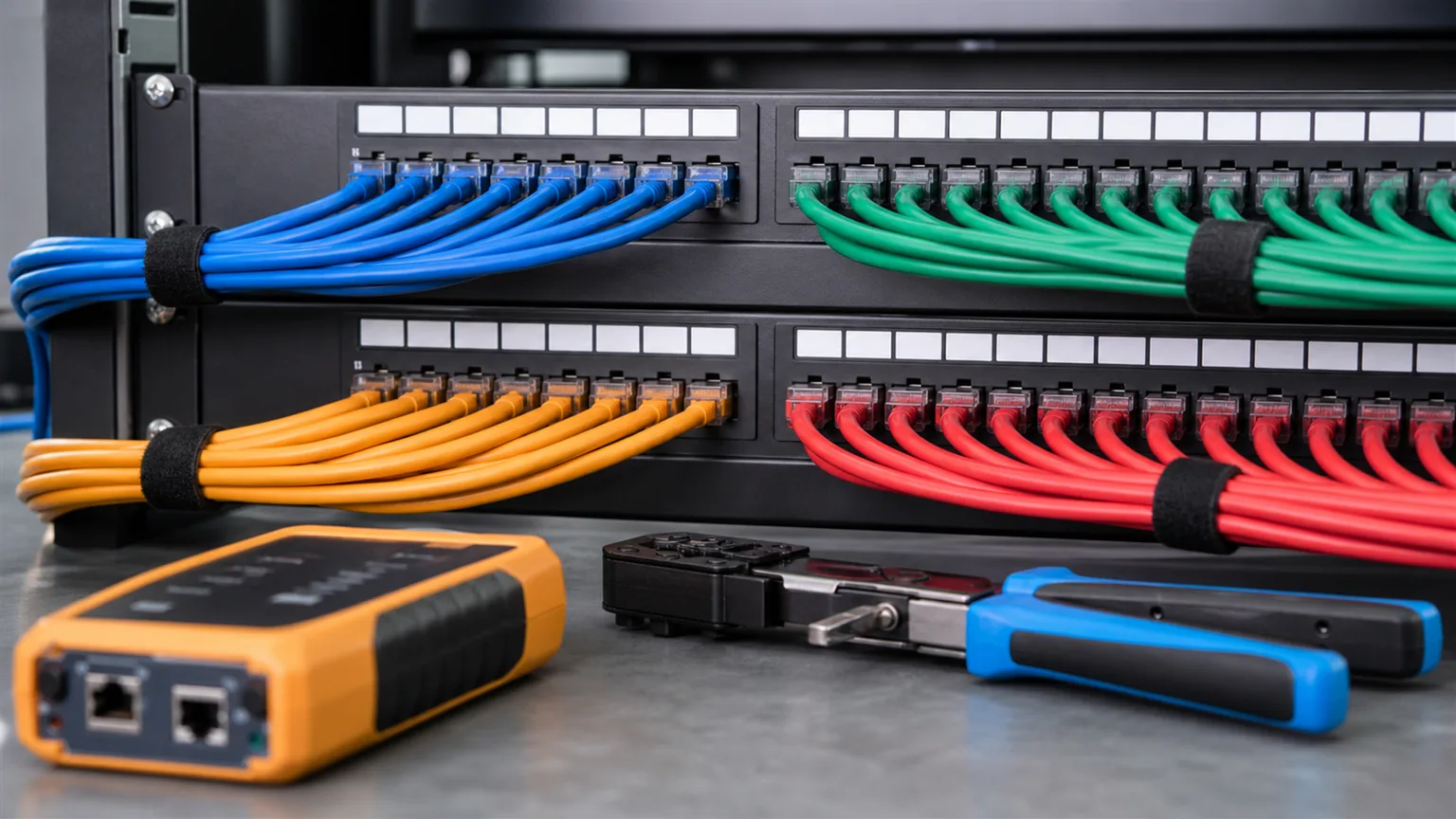
- Patch panel and rack cabinet — a centralized point where everything terminates, with clear labelling of every port.
- Testing — every cable is tested with a professional tester that verifies performance and identifies connector errors.
- Documentation — delivery of a cabling schematic that stays with the premises and facilitates future work.
Common mistake: Cabling without testing. A cable with a connector error can dramatically reduce speed or cause intermittent dropouts — while looking perfectly fine visually. Every cable must be tested before handover.
Conclusion
Well-done network cabling is an investment you don't see — but use every day. Poor cabling is a constant source of problems and expense.
We plan and install network cabling in offices in Belgrade — from design to testing and documentation. Contact us before renovation starts.