Imagine a computer that does not try a secret one step at a time, but uses physics to skip a huge part of the search. If such a quantum computer becomes stable and large enough, parts of today's digital security will have to change: banks, certificates, VPNs, digital signatures and even cryptocurrencies.
That does not mean Bitcoin is hacked tomorrow or that today's encryption has stopped working. It means the world is already preparing for the moment when RSA, ECC and similar systems are no longer enough.
What did Microsoft actually announce?
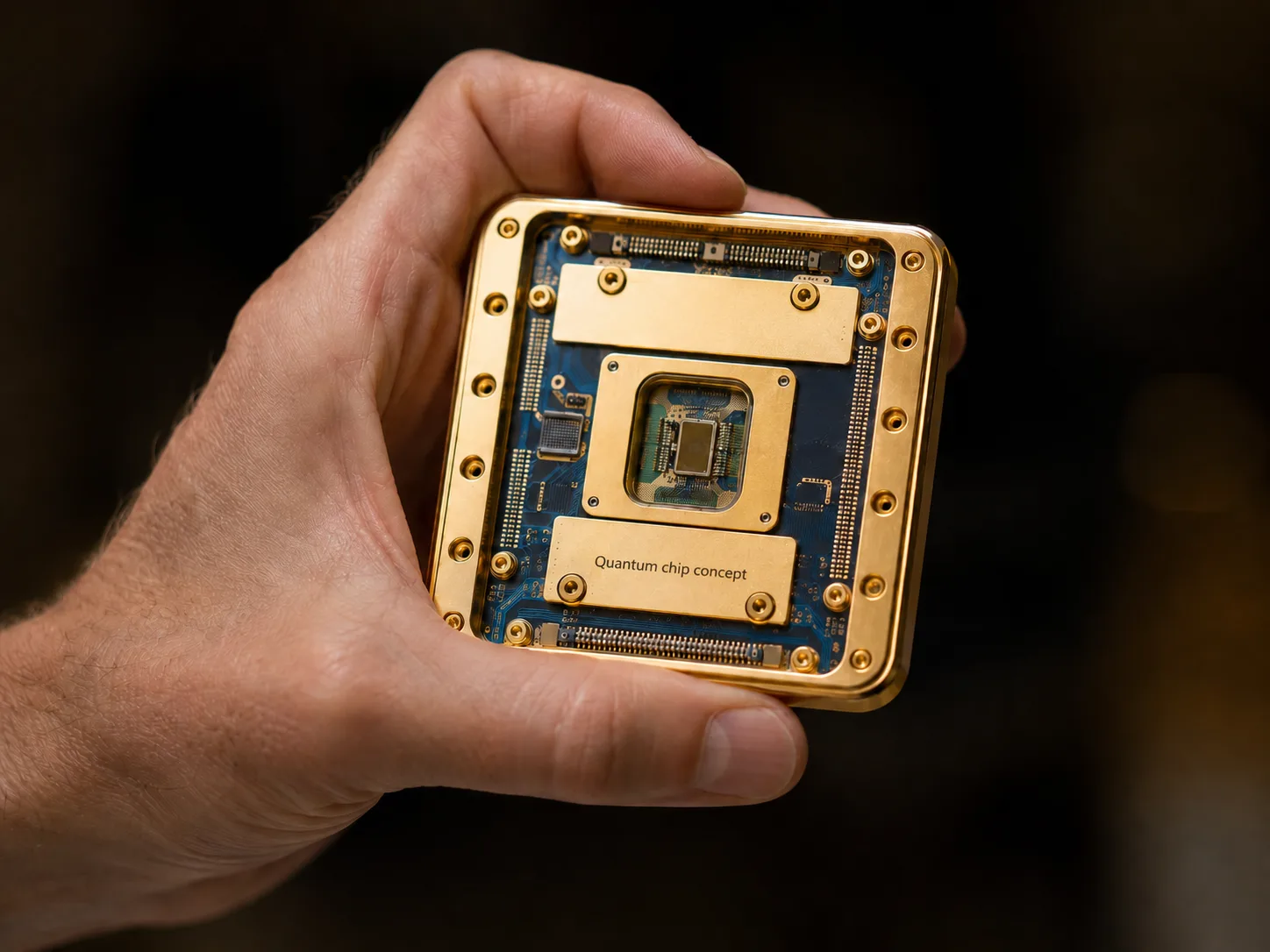
In May 2026, Microsoft presented Majorana 2 as the next step in its work on topological qubits. In Microsoft's explanation, the chip is part of a broader story: Microsoft Discovery, agentic AI and supercomputing were used to speed up research into materials and designs.
The key claim is stability. Microsoft says Majorana 2 qubits are about 1,000 times more reliable than the previous generation and have an average lifetime of roughly 20 seconds, compared with milliseconds for earlier demonstrations. If confirmed in practice, that is a major improvement.
But this is not a product a company buys tomorrow, nor a laptop that suddenly solves every problem. It is a research milestone on the way to machines that could run useful quantum calculations, with a lot of engineering still between the lab and everyday use.
How a quantum chip works, without a blackboard full of formulas
A classical computer works with bits: 0 or 1. A quantum computer works with qubits, which can be in states we simplify as a combination of 0 and 1. That does not make a qubit magic; it means calculations can use probability, measurement and linked states in a different way.
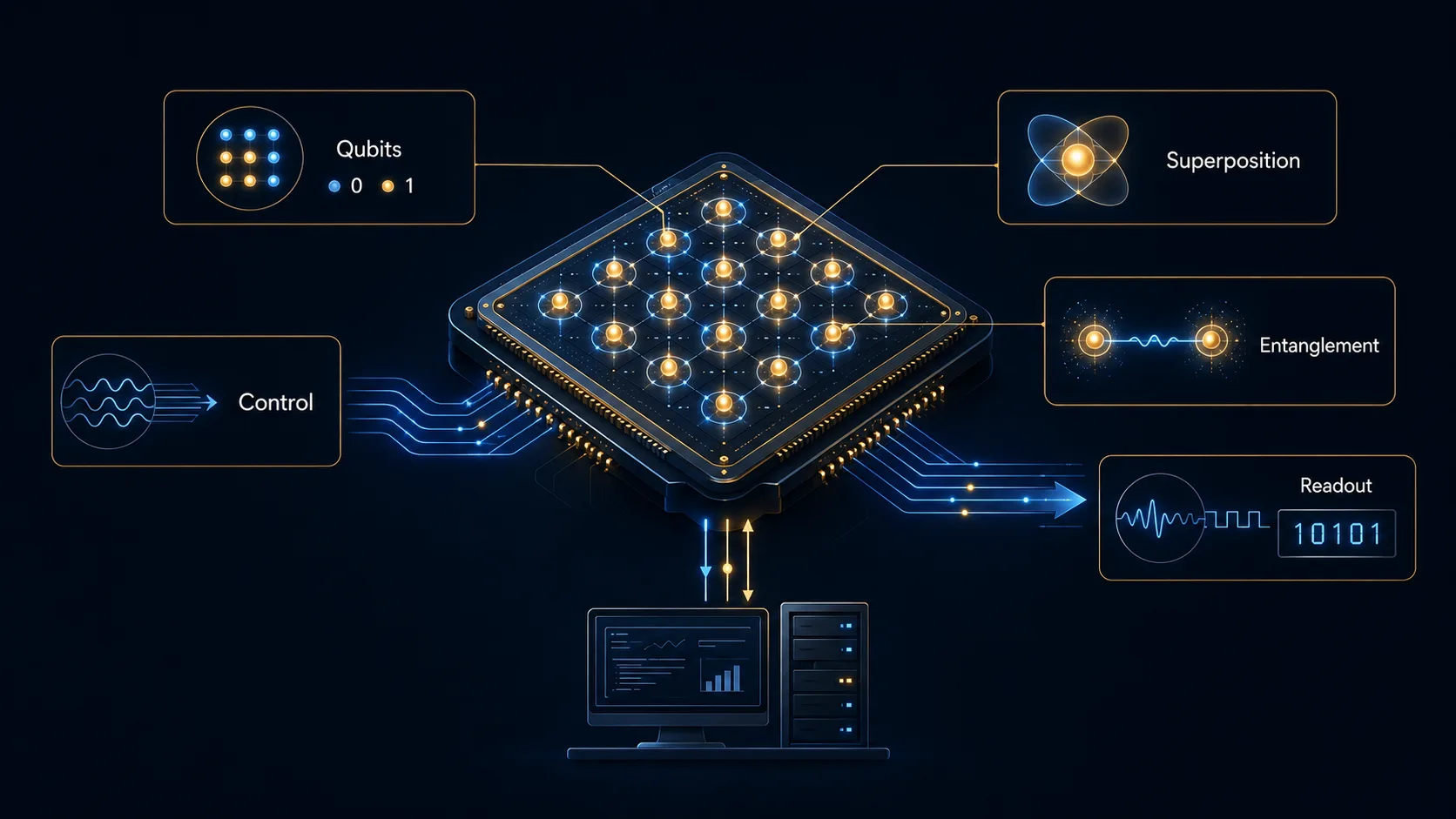
Superposition lets a qubit carry several possible states before measurement. Entanglement links qubits so their combined state matters. Control signals manipulate the qubits, and readout is the measurement that returns a result to an ordinary computer.
The hard part is that qubits are extremely sensitive. Noise, temperature, vibration and errors quickly damage the result. That is why the real battle in quantum computing is stability, error correction and scaling, not just an impressive chip photograph.
Why is the Majorana approach getting attention?
Microsoft is trying to build topological qubits, an approach that could, in theory, be more resistant to errors than many other quantum architectures. The idea is to protect information through the way it is physically arranged in the system, not only by constantly correcting errors after they appear.
That is why Majorana 2 matters. If Microsoft's claim proves robust, it may shorten the path toward more stable quantum systems. If it does not, it becomes another ambitious quantum announcement that sounded larger than reality allowed.
Important: quantum computers are not "faster computers for everything." They may become extremely powerful for specific classes of problems, but they will not replace normal computers for email, spreadsheets, websites or everyday business software.
Official Microsoft video
The best way to see Microsoft's framing is the official video, while linking to the original Source article for official photographs instead of copying them as local assets.
Does a quantum computer break encryption?
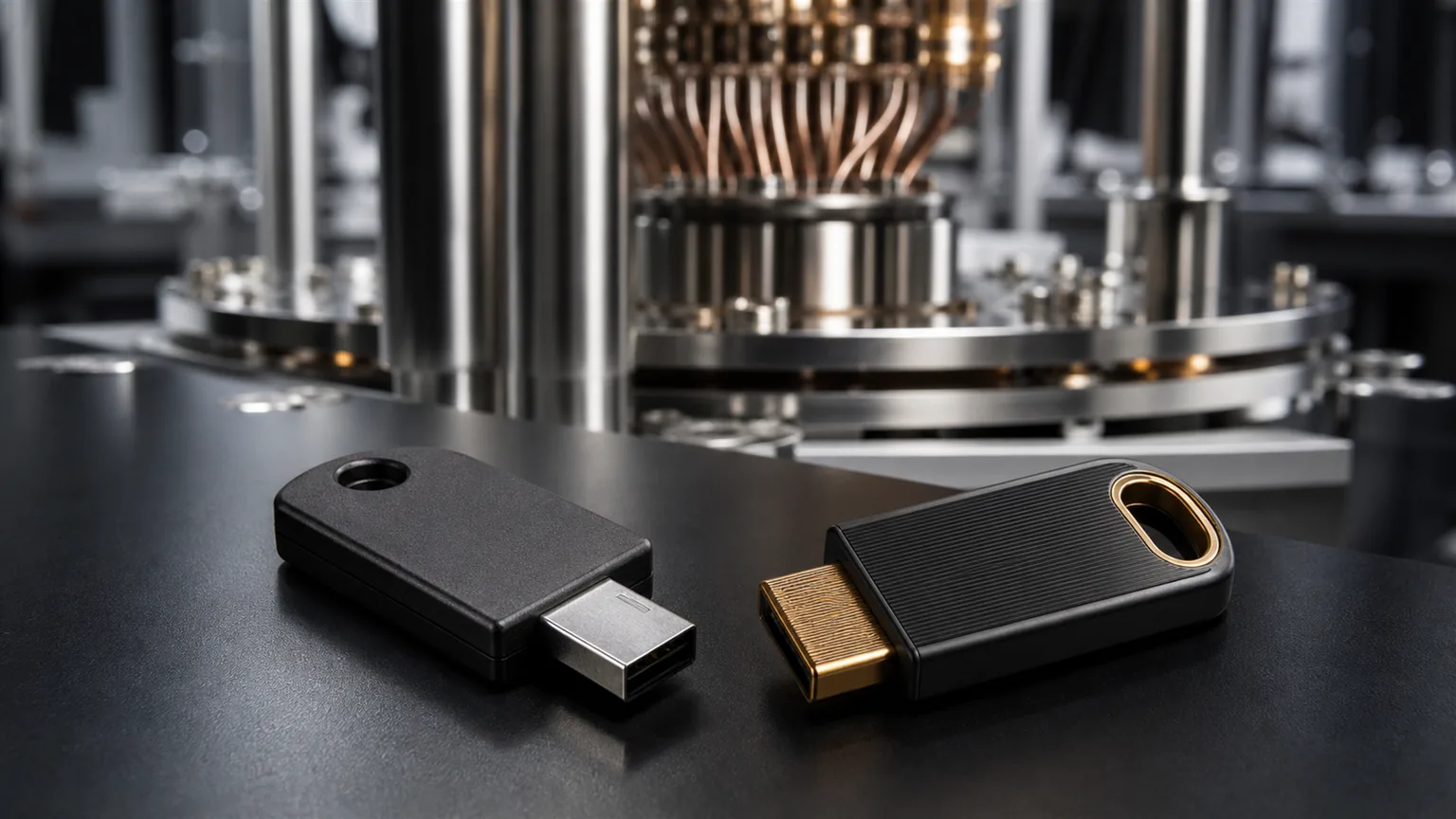
Today's encryption did not become unsafe overnight. The long-term issue is this: a sufficiently strong quantum computer could threaten cryptography based on public and private keys, especially RSA and ECC. That is why NIST is already standardizing post-quantum algorithms.
Symmetric encryption such as AES is not in the same risk category. Quantum computers can change security margins, but the usual answer is stronger keys and parameters, not instant collapse.
There is also the "harvest now, decrypt later" problem: someone may store encrypted data today and try to decrypt it once strong enough quantum computers exist. That is why migration planning starts before the crisis becomes public.
What about Bitcoin? Could a quantum computer "copy" it?
With cryptocurrencies, the issue is not that someone would copy Bitcoin like a file. Bitcoin does not work that way. The more realistic risk is control of keys: if a public key is visible on the blockchain, a sufficiently strong quantum computer could theoretically derive the private key and sign a transaction as the wallet owner.

So the danger is not stealing a copy of a coin. It is stealing control over the key. That is why address hygiene, address reuse, key storage and a future path to post-quantum signatures matter in the cryptocurrency world.
Sensational version: the clock is ticking. Practical version: not for tomorrow morning, but loudly enough that serious systems are already planning migration.
Where does healthy skepticism belong?
BBC's coverage added important context: quantum computing is full of big promises, and important claims need independent verification. Microsoft has a serious team and serious technology, but the road from a lab result to a reliable, large quantum computer is not short.
So this story should be read as a strong signal, not a completed revolution. Majorana 2 may be an important step, but a quantum computer that changes cryptography must be large, stable, verifiable and practically available.
What should businesses do today?
For most businesses, the answer is not buying "quantum ready" hype. Today it is more useful to check basics: backup, account control, MFA, Microsoft 365 configuration, updates, devices that leave the office and how business data is stored.
Larger organizations, banks, government systems and companies that store long-term confidential data should already follow post-quantum migration. Small businesses do not need to panic, but they should understand that cryptography is not finished forever.
NBG TEAM follows these technology shifts because they often sound distant at first, then slowly arrive in everyday IT through cloud, security and business software.
Sources
- Microsoft Source: Majorana 2, Microsoft Discovery and agentic AI
- BBC: Microsoft's quantum chip and expert reactions
- NIST: first finalized post-quantum encryption standards
- CISA: quantum and post-quantum cryptography
Whatever the future of encryption, a business needs to know where its data is and how to restore it after an incident. Backup verification and recovery planning address that practical part of business continuity.